Some favorite 1” analog, broadcast TV ads for Allegheny General Hospital in Pittsburgh. I directed and photographed these commercials from 1995 to 1998.
All footage was shot on 16mm or 35mm motion picture film. 35mm for staged production scenes & 16mm for a “documentary” feel inside the hospital. Of course, everything in the 90’s was standard definition.
During film-to-tape transfers, we’d increase the grain effect from the 16mm negative and add an effect that simulates double printing each frame. An overall blue color grade was added to the 16mm to null out any red blood during operating room procedures.
Atlanta’s Cinefilm processed the color negative. Film-to-tape transfers were handled by colorist, Brent Clenny at Nashville’s Elite Post. Dennis Morabito was the principal writer & Paul Jorgensen was the hospital’s production coordinator. Don Wadsworth was our voice actor.
This fast-paced reel is a mix of varied concepts, visualized by Glenn Przyborski’s directorial style and production techniques. Some spots are new, others were produced over the past few years. All scenes are from actual on-air commercials created for ad agencies and clients from across the country.
From gritty to silky-smooth, Glenn’s years of experience allow him to create different visual “styles” using lighting & camera techniques to best convey an ad’s concept. Glenn’s at home shooting “guerrilla” style with a small crew of 4 or a 25 person, multi-day studio production.
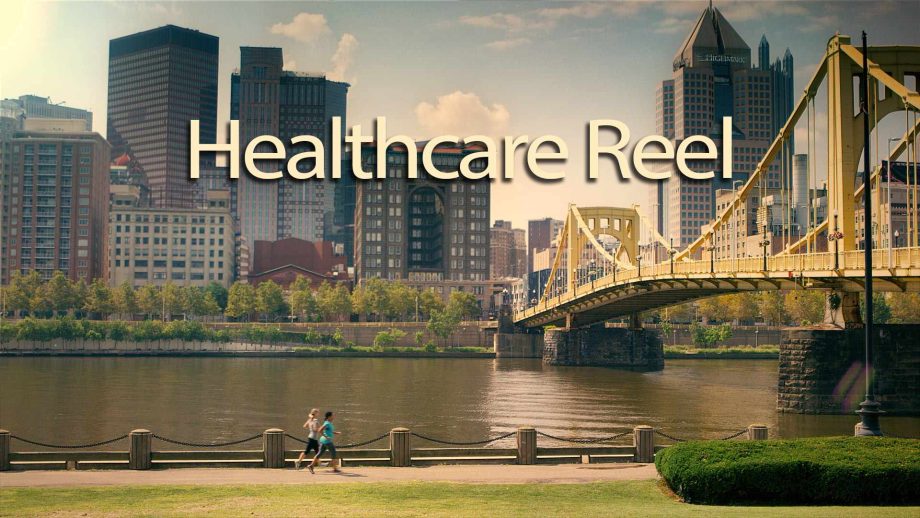
Every year Glenn Przyborski directs & photographs major healthcare campaigns. He shoots for agencies across the country as well as clients who internally handle their own creative marketing.
Przyborski is one of the few commercial directors who realizes production inside a busy hospital is not the same as filming in a studio. He knows how to work with doctors & medical teams to get great footage with minimal disruption. Everyone on the production crew is aware that real patients take precedence over the filming process.
The commercials featured on this reel demonstrate Glenn Przyborski’s directorial styles & techniques that enhance a project’s concept. All featured doctors & hospital staff are real. Testimonials are given by actual hospital patients. All operating room scenes were photographed during actual procedures.
CLICK HERE TO PLAY JOHN’S REEL
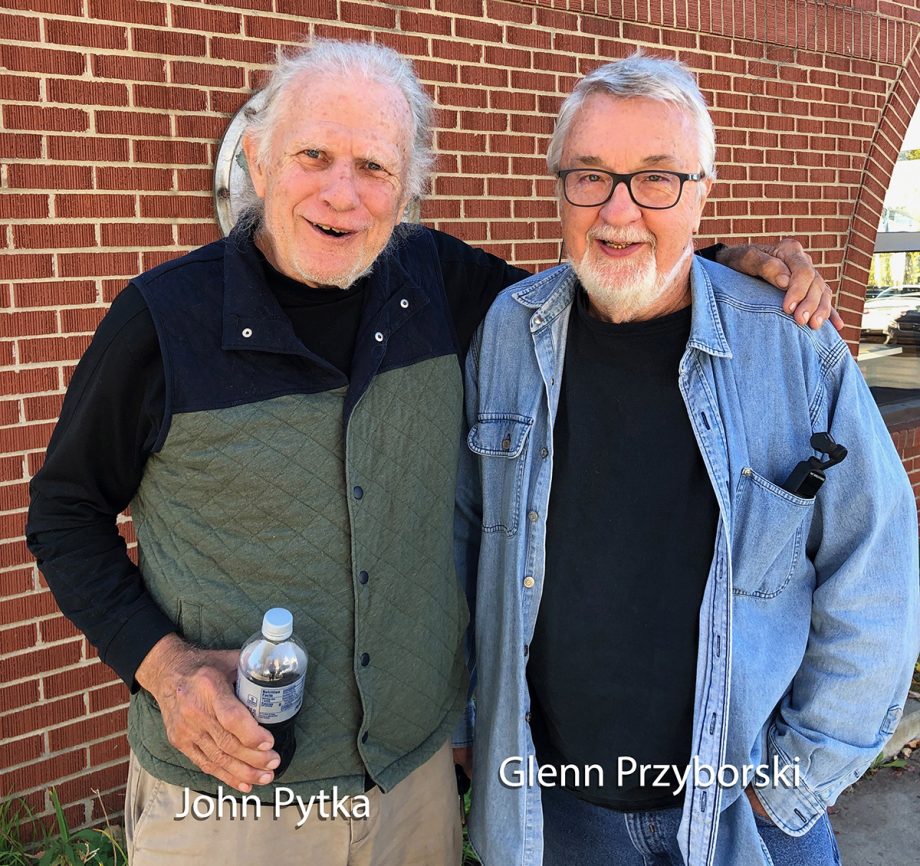
My friend, director/cinematographer John Pytka passed away in 2024. It happened soon after his 82nd birthday.
For years, John & I would get together for lunch every month or so. We’d share stories about film production in the 70’s through 90’s. Based in Pittsburgh, John & his older brother Joe, were “Pytka Productions”, one of the country’s top commercial production companies. On some of Joe’s projects, both brothers would work together. Separately, John directed & photographed network TV commercials for Alamo Car Rental, Gallo Wine, Budweiser, & many more. He was often used by San Francisco’s Hal Riney & Partners to photograph iconic ad campaigns, including Ronald Reagan’s memorable “Morning in America” TV commercial.
John’s reel from the days of 35mm film, showcases a different style of production than what’s en vogue today. It’s well paced, beautiful photographic images. Many of the scenes incorporate slow-motion that creates a “larger-than-life” feel to the action. I describe his photographic technique as “moving stills”. This contrasts with today’s fast cuts, punchy graphics & rapid camera moves.
As a true “filmmaker”, John also edited many of the commercials he shot. This involved cutting thousands of feet of 35mm work print, using a classic Moviola upright editing machine. At the start of his career, John worked at a motion picture film lab. He mastered all aspects of color film processing, Hazeltine color timing & the use of sophisticated optical printers.
John spent much of his retirement with his wife, Jennifer on their farm North of Pittsburgh, Pennsylvania. He loved his dogs & would often take them for rides in his truck. We’ll all miss him.

For 25 years, I directed and photographed almost every Eat’nPark TV campaign. During that time, Cliff Miller was the driving force behind Eat’n Park’s advertising. First as Creative Director at Ketchum Advertising, then as Eat’n Park’s own VP of Creative Services. It was Cliff’s idea to use Eat’n Park’s iconic “Smiley Cookie” as a key part of the company’s image & logo. (Cliff retired from Eat’n Park in 2016.)
From 35mm standard definition to HD digital, I thought it’d be fun to look back at a dozen Eat’n Park’s TV commercials from 1990 to 2015.
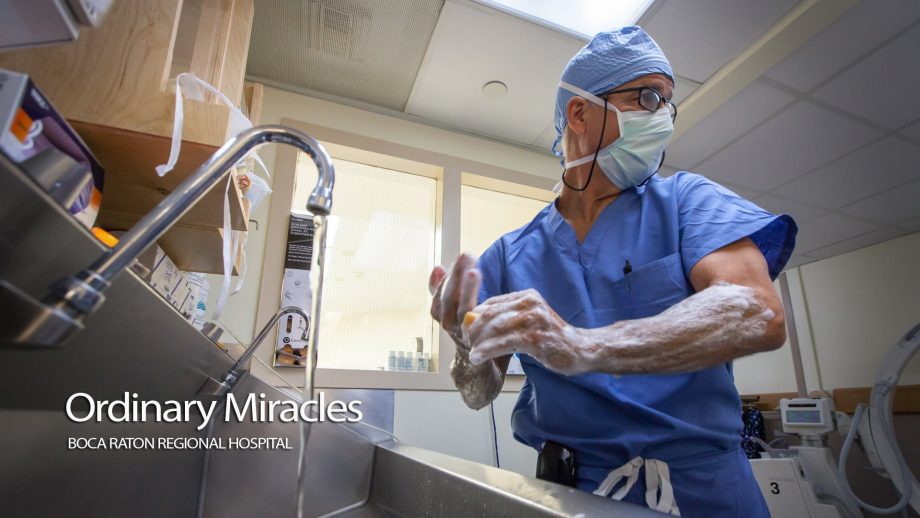
For the 50th Anniversary of Boca Raton Regional Hospital, Tom Chakurda, vice-president of marketing and communications, asked Przyborski Productions to create a moving video that would be a tribute to their doctors, nurses and thousands of employees.
For the celebration, the medical center secured the rights to Barbra Streisand’s “Ordinary Miracles”. This inspirational song celebrates the work that people do everyday for the benefit of others.
Clients sometimes ask if I miss shooting commercials on film as we used to do on every project. Our last “film” production was in 2006. Looking back, my business partner, Jim DeVincentis and I had a lot of fun on film shoots in the late 80’s, 90’s & early 2000’s.
In the mid-90’s, JVC introduced a small mini-DV camcorder. We bought several of them and asked clients and crew to shoot some behind-the-scenes video during our film productions. I located several of the old tapes and edited them together with the actual footage we were filming. Of course everything back then was standard definition.
Most people think of the past with nostalgia… as if things were always better in the “good old days.” Do I miss shooting film? I’ve always enjoyed working with agencies & clients to create commercials that everyone was proud to air. The specific production “medium” was never the most important part of a project.
My son John said, “Dad… If the vinyl LP record can return to popularity, movie film has a good chance of a come back.” You never know…
Here’s a visual “time capsule” of KDKA-TV (CBS Pittsburgh) promos from ’79-’96.
Friends at a retirement party for KDKA’s Drew Moniot reminded me of the many promotional campaigns Przyborski Productions produced for KDKA from 1979 through 1996. Those were the “analog” days of 35mm film production, film-to-tape transfers, and tape-to-tape video editing.
I was fortunate to work with 3 of KDKA’s creative services directors… Brad Crum (1979-1982), Art Greenwald (1985-1988), & Lorraine Sneebold (1988-1996). The promos we produced were often music-driven, high-energy spots that featured KDKA’s on-air talent and their interaction with the community.
The earliest of these promotions aired 45+ years ago. They’re a visual tribute to KDKA’s talent and staff, many of whom are retired or unfortunately, no longer with us.
I directed and photographed many TV campaigns for Cleveland based ad agencies. The most talented agency creative director I worked with was Alan Glazen. His agency was given an assignment to produce a TV spot and long-form video for Action Technology (now part of the Invacare Corp.) The company manufactures specialized, wheelchairs that are used throughout the world by athletes. The video was produced to be played at a major wheelchair athletics competition.
The Americans with Disability Act (ADA) had just been signed into law, but many public buildings weren’t “wheelchair friendly.” Alan Glazen created an amazing script that was designed to let the world know, that people who have a physical disability, don’t want your pity or sympathy. They just want you to get out of their way and treat them as you would anyone else.
Alan and I filmed the intense, stylized action scenes of the wheelchair athletes in an old basketball gymnasium at Cleveland’s Case Western Reserve University. I shot all the scenes with my Arriflex 35BL4 equipped with Zeiss super-speed lenses. During film-to-tape transfer in Nashville, the clipped color and accentuated grain was added.
The “news event” scenes were filmed the following day in the lobby of an old downtown Cleveland office building. After transferring the 35mm negative to 1″ analog tape, I edited part of the project in Pittsburgh, with Glazen handling the final edit, original music and audio mix at a Cleveland facility.
As a footnote: Some years ago, Alan Glazen sold his ad agency and today is the successful owner of multiple restaurants in Cleveland, Ohio.
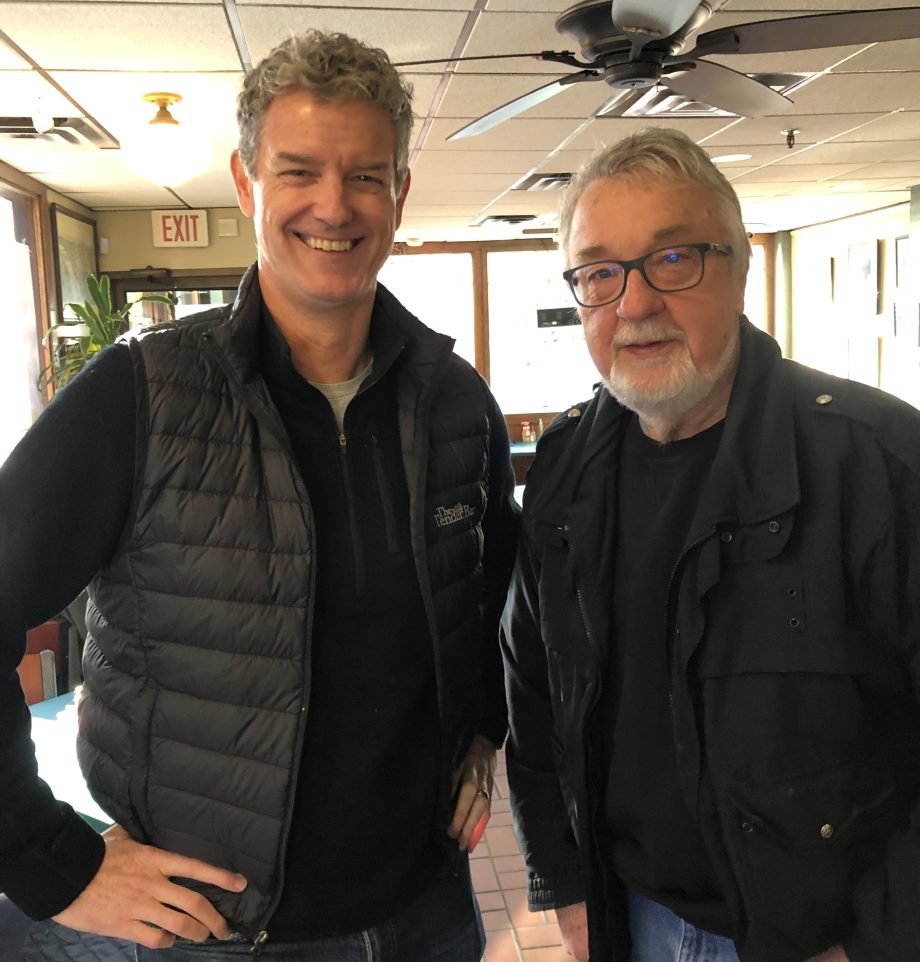
Over the past 30 years, John “Buzz” Moyer has become one of the most sought after cameraman and Steadicam operators in the film & TV industry. John has shot over 70 feature films & TV series including Marvel’s, “The Avengers” and Stephen Spielberg’s remake of “West Side Story”. John won the 2022 Society of Camera Operators (SOC) Camera Operator of the Year Award for his work on “West Side Story”.
He began his career as a Steadicam operator working on numerous TV commercials, including hundreds of ads for Przyborski Productions. In the mid-90’s almost every major TV project included Steadicam cinematography. In the early 90’s, John bought a used Steadicam and taught himself to be an excellent operator. Today all his camera equipment is state-of-the-art.
John’s filmed projects all over the world, but still lives in Pittsburgh with his wife Kathy and their sons, Hayden & Grady. He’s also an excellent woodworker and talented pianist.